Doxorubicin, an anthracycline, is a potent anti-cancer drug; however, its clinical use is hindered by its acute and chronic side effects, particularly cardiotoxicity. This study aimed to assess the protective effects of quercetin on doxorubicin-induced cardiotoxicity. Wistar rats were divided into five groups: a control group receiving saline (1 mL/kg), a quercetin control group receiving DMSO (1 mL/kg), a quercetin group receiving quercetin (20 mg/kg), a doxorubicin group receiving doxorubicin (25 mg/kg) intraperitoneally for three days, and a pretreatment group receiving quercetin (20 mg/kg) for 14 days before being treated with doxorubicin (25 mg/kg). After 14 days, the rats’ weights were recorded, and heart tissue samples were collected for histopathological examination. The results revealed significant weight loss in the doxorubicin-treated animals (P < 0.05), while quercetin pretreatment prevented the weight loss. Pathological analysis showed that quercetin protected the heart tissue from doxorubicin-induced damage. Overall, this study suggests that quercetin pretreatment effectively prevents doxorubicin-induced cardiotoxicity, likely due to its antioxidant properties.
Cancer is currently one of the leading causes of death in both economically developed countries and developing nations, ranking as the second major cause of death in the latter [1, 2]. Epidemiological data indicate that cancer-related deaths are prevalent, with many individuals succumbing to the disease each day [3-5]. The incidence of cancer also tends to increase with age. With the growing global aging population, it is projected that by 2030, nearly 70% of cancer cases will be diagnosed in individuals over 65 years of age [4-6]. Standard cancer treatments, including surgery, chemotherapy, and radiation, often come with systemic toxicities that limit their effectiveness and long-term application. Despite their use, these treatments typically result in poor survival rates and suboptimal clinical outcomes for many cancer patients [7].
Doxorubicin (DOX) is a widely used chemotherapeutic agent with potent antitumor and anti-cancer activity, first introduced for cancer treatment in the late 1960s [8, 9]. However, its use is often restricted due to its significant side effects, particularly its cardiotoxicity and hepatotoxicity, which arise from damage to non-target tissues. These toxic effects are believed to be primarily mediated by the production of reactive oxygen species (ROS), mitochondrial dysfunction, and cytotoxicity [10-13]. ROS generation and apoptosis induction are central mechanisms underlying doxorubicin’s toxicity to various organs, including the heart and liver [13-15]. To mitigate these toxic effects, cells rely on antioxidant defense systems, such as the glutathione-dependent system, to neutralize free radical damage [16, 17]. Over the past decade, numerous research efforts have focused on developing strategies to prevent the cardiotoxic and hepatotoxic effects of doxorubicin [18-20]. Studies have reported the protective effects of morphine, tetradrine, and amifostine against the cardiotoxic damage induced by doxorubicin [18-20].
Natural compounds, particularly those with antioxidant properties, have garnered attention for their potential to alleviate chemotherapy-induced side effects. One such compound is quercetin, a flavonoid found in many plant-based foods such as onions, apples, and green tea. Quercetin has been shown to possess a range of pharmacological effects, including neuroprotective, anti-cancer, anti-inflammatory, and antidiabetic properties. Research has also indicated that quercetin may protect against hepatotoxicity induced by various substances. However, its potential to prevent doxorubicin-induced cardiotoxicity remains an area of ongoing investigation. Given the lack of a definitive solution for doxorubicin-induced cardiotoxicity, exploring the protective effects of antioxidants like quercetin is crucial [21-26].
This study aims to evaluate quercetin’s ability to mitigate doxorubicin-induced cardiotoxicity in a rat model.
In this experiment, male Wistar rats weighing 200-220 g were used. The animals were housed in a controlled environment with regulated temperature, humidity, and a 12-hour light/dark cycle. Following a one-week acclimatization period, the rats underwent the experimental procedures.
The rats were divided randomly into five groups, each consisting of six rats. Group 1, the control group, received saline (1 mL/kg) via gavage for 14 days. Group 2 received DMSO (1 mL/kg) by gavage for the same duration. Group 3 was treated with quercetin (20 mg/kg) by gavage for 14 days. Group 4 received doxorubicin (25 mg/kg) intraperitoneally on days 12, 13, and 14. Group 5, the pretreatment group, was administered quercetin (20 mg/kg) for 14 days before receiving doxorubicin (25 mg/kg) on the same schedule as Group 4.
On day 15, all rats were euthanized, and their hearts were removed, rinsed with saline, and fixed in formalin. The heart samples were then processed using standard histological techniques, embedded in paraffin, and sectioned into 5-micron slices. Hematoxylin-eosin staining was performed on the sections, and a pathologist conducted pathological evaluation.
Figure 1 presents the weight changes observed across the groups. The rats in the doxorubicin group experienced significant weight loss compared to the control group (P < 0.05). In contrast, no significant difference was observed between the treatment and control groups, suggesting that quercetin may have protected against weight loss in doxorubicin-treated rats. Further pathological analysis of heart tissue is expected to reveal the extent of quercetin’s cardioprotective effect.
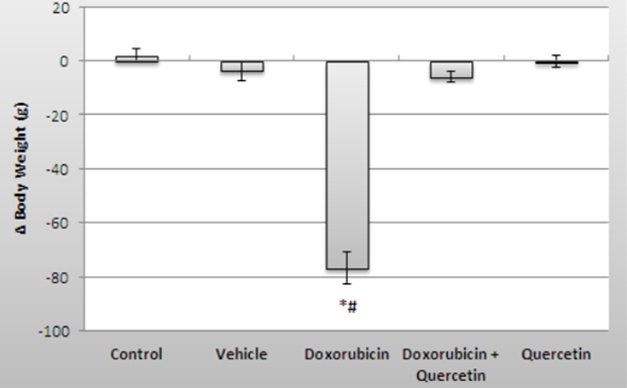
Figure 1. Changes in body weight across the different experimental groups are presented as mean ± SD. A significant reduction in body weight was observed in the doxorubicin group (P < 0.05*) compared to the control group. However, in the doxorubicin + quercetin group, the weight loss was significantly less (P < 0.05#) compared to the doxorubicin-only group, suggesting the protective role of quercetin.
Figures 2-5 show histopathological findings in the heart tissue across the various treatment groups.
Figure 2 shows the heart tissue from the DMSO-treated group. The cardiac cells and their structure appear normal, with minimal vascular involvement and well-preserved myocardial fibers.
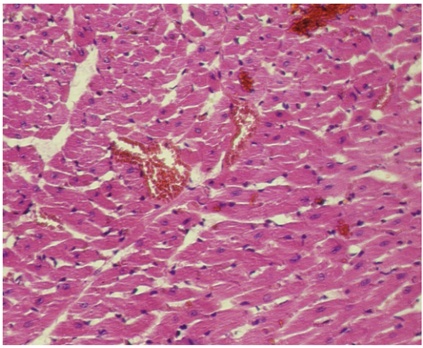
Figure 2. A view of the heart in the DMSO group.
Figure 3 presents the heart tissue of rats treated with quercetin alone. Similar to the DMSO group, cardiac muscle fibers and cells remain largely intact, with only minimal striation changes.
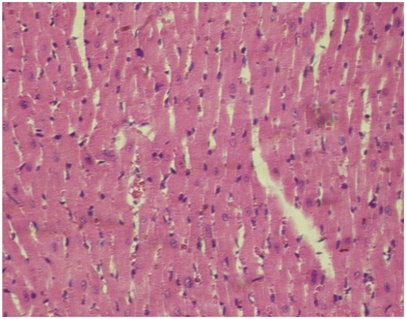
Figure 3. A view of the heart in the quercetin group.
Figure 4 depicts the heart in the doxorubicin-treated group. Here, there is clear evidence of vascular damage, with hyperemia and significant muscle fiber loss. Collagen deposition is also evident, highlighting the tissue damage caused by doxorubicin.
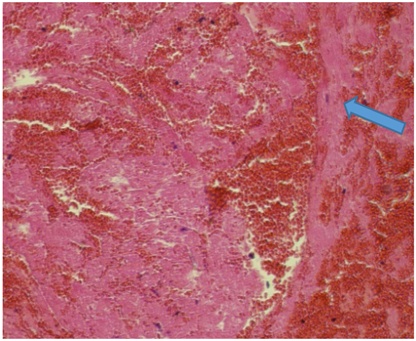
Figure 4. A view of the heart in the group receiving doxorubicin.
Figure 5 illustrates the heart tissue from the doxorubicin + quercetin group. This group showed considerably less muscle fiber loss compared to the doxorubicin-only group, indicating the protective effect of quercetin. Collagen fibers were also present but in much smaller quantities than in the doxorubicin-only group, further supporting the potential therapeutic effect of quercetin.
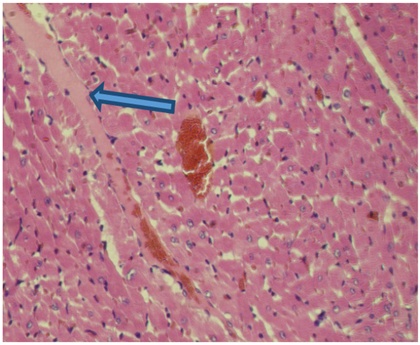
Figure 5. A view of the heart in the group receiving doxorubicin plus quercetin.
Doxorubicin is an anthracycline chemotherapy drug commonly used to treat various cancers. However, its use is limited due to its severe side effects, including cardiotoxicity and toxic effects on the kidneys and liver [10, 11]. This study investigated the protective effects of quercetin against doxorubicin-induced cardiotoxicity in male rats. The results showed that pretreatment with quercetin significantly prevented the severe weight loss induced by doxorubicin. Measuring body weight in mice is a common method to assess the general health of animals after chemical exposure. The results confirmed that a decrease in body weight was a clear indicator of doxorubicin’s toxic effects, likely due to increased oxidative stress and free radical production [27].
Histological analysis also confirmed that quercetin provided effective cardiac protection against doxorubicin-induced damage. Doxorubicin treatment at a dose of 25 mg/kg for three days caused significant damage to heart tissue, as evidenced by muscle fiber loss. However, when quercetin was administered before doxorubicin treatment, the damage to muscle fibers was significantly reduced, and the amount of collagen fibers was minimal, demonstrating quercetin’s protective effect.
Furthermore, previous studies have shown that quercetin protects the liver against doxorubicin toxicity. Pretreatment with quercetin reduced elevations in liver enzymes such as ALT, AST, and ALP, and increased malondialdehyde (MDA) levels, a marker of oxidative stress. Additionally, quercetin treatment increased superoxide dismutase (SOD) levels in the quercetin-doxorubicin group, suggesting an enhanced antioxidant defense. These effects can be attributed to quercetin’s antioxidant properties, which are likely mediated by its ability to stabilize cell membranes and prevent lipid peroxidation. The involvement of oxidative stress and reactive oxygen species in the development of doxorubicin-induced cardiotoxicity has been well-documented [28].
The protective role of quercetin against ethanol-induced liver damage has been well documented, particularly its ability to mitigate oxidative stress [29]. In a study investigating the protective effects of quercetin from black tea on lipid peroxidation and antioxidant enzyme levels altered by insecticide toxicity in rats, the aqueous black tea extract significantly reduced lipid peroxidation. It also restored antioxidant enzymes, such as superoxide dismutase (SOD) and glutathione peroxidase (GPx), to normal levels. This protection is attributed to the antioxidant properties of the polyphenols found in black tea [30].
Quercetin’s protective effect has also been noted in preventing ethanol-induced gastric ulcers. In this study, significant increases in malondialdehyde (MDA) and reductions in SOD and GPx levels were observed compared to the control group. The researchers concluded that quercetin’s antioxidant properties were responsible for protecting the gastric mucosa from ethanol-induced damage [31]. Additionally, quercetin has been shown to protect against acute hepatotoxicity caused by carbon tetrachloride. When administered for two weeks, quercetin reduced MDA levels and liver enzyme activity compared to the CCl4-induced toxicity group. It also increased SOD and GPx levels, which had been significantly reduced in the CCl4 group [32]. In another study focused on the protective effects of quercetin and curcumin against paracetamol-induced liver and kidney damage, quercetin was found to reduce liver injury significantly [30-32].
These findings support the hypothesis that quercetin protects the heart from oxidative stress caused by doxorubicin. If further studies and randomized controlled trials confirm these results, quercetin could be recommended as an adjunctive treatment to prevent oxidative damage in cancer patients receiving doxorubicin. It could be incorporated into treatment regimens as either a food supplement or as part of pharmaceutical interventions. However, it is still unclear whether quercetin could interfere with the therapeutic effects of doxorubicin, and this was not explored in this study. Additionally, the effects in cancer patients with neoplasia were not addressed, indicating the need for further research.
In this study, toxicity was induced in healthy mice, and future studies should consider using a cancer model to explore the effects of quercetin in that context. Furthermore, the levels of cardiac enzymes and MDA should be examined in subsequent studies. As doxorubicin was administered intraperitoneally in this study, future research could consider intravenous administration and test different quercetin doses.
This study aimed to explore quercetin’s protective effects against doxorubicin-induced cardiotoxicity. The results revealed that while doxorubicin caused significant weight loss in the rats, pretreatment with quercetin effectively prevented this weight loss. Pathological examination revealed that quercetin protected the heart against doxorubicin-induced damage. The findings suggest that quercetin may help prevent doxorubicin-induced cardiotoxicity, likely through its antioxidant effects.
None
None
None
None
Open Access The author(s) retain copyright. This article is licensed under the Creative Commons Attribution-NonCommercial-ShareAlike 4.0 International License. It may be shared and adapted for non-commercial purposes with appropriate attribution, an indication of changes, and distribution of adaptations under the same license. Third-party material may be subject to separate terms identified in its credit line. View the license at https://creativecommons.org/licenses/by-nc-sa/4.0/.
 Eurasian Academy of Medicine and Dentistry

