The translation of drug delivery innovations from laboratory design to clinical application remains uncertain, expensive, and highly selective. Many systems demonstrate promising biological activity in early studies but fail to progress because evidence of manufacturability, safety, stability, or regulatory maturity is incomplete. This creates a recurring gap between technical novelty and clinical readiness. Existing technology readiness models provide useful language for describing maturity, but they were not originally designed for pharmaceutical technologies. Drug delivery systems require simultaneous assessment of material attributes, formulation behaviour, biological performance, dose reproducibility, scale-up potential, and patient-facing utility. A single linear maturity scale is therefore insufficient for classifying readiness before first-in-human development. This article develops a novel conceptual model called the Pharmaceutical Technology Readiness Matrix. The model integrates technology readiness logic, drug delivery innovation categories, and preclinical translation criteria into a structured assessment framework. Its purpose is to support transparent classification, risk assessment, and decision-making before clinical translation. The proposed matrix adapts readiness levels for drug delivery technologies, classifies major innovation categories, defines preclinical translation criteria, and links evidence maturity to risk and Go/No-Go decisions. Five tables specify the readiness levels, innovation categories, translation criteria, matrix design, and decision pathway. Together, these elements provide a practical conceptual tool for comparing heterogeneous delivery technologies. The Pharmaceutical Technology Readiness Matrix may help researchers, investors, developers, and regulators evaluate drug delivery systems more consistently. By making evidence gaps explicit before clinical translation, the model aims to reduce avoidable attrition and guide rational allocation of development resources. Future empirical validation will be required to test its predictive value across delivery platforms and therapeutic areas.
Drug delivery innovation has expanded rapidly across lipid nanoparticles, polymeric carriers, microneedles, long-acting formulations, implantable systems, and biologic delivery platforms, yet clinical translation remains difficult. The broader pharmaceutical pipeline is marked by high attrition, and failures often reflect gaps between preclinical promise and clinical, manufacturing, or regulatory feasibility rather than absence of pharmacological activity alone [1]. In drug delivery, this gap is particularly visible when novel materials show strong laboratory performance but lack reproducible evidence of safety, biodistribution, scale-up, or product stability [2].
Nanomedicine provides a clear example of this translational imbalance because numerous nanoparticle systems have been reported, while relatively few have achieved durable clinical and commercial adoption. Analyses of approved and clinical-stage nanoparticle medicines show that success depends not only on carrier novelty but also on formulation robustness, therapeutic rationale, regulatory clarity, and manufacturing control [3]. Reviews of nanomedicine translation further emphasise that delivery systems must be assessed as integrated pharmaceutical products, not simply as experimental platforms [4].
A standardised readiness assessment tool is therefore needed because existing evidence is often dispersed across physicochemical, biological, toxicological, and manufacturing domains. Technology readiness approaches offer a common maturity language, but biomedical adaptations show that generic readiness levels require contextual modification before they can guide translational decisions in health innovation [5]. Biomanufacturing readiness work similarly demonstrates that shared terminology can improve alignment among researchers, developers, and decision-makers when technologies move toward commercial development [6].
This article proposes the Pharmaceutical Technology Readiness Matrix as an original conceptual model for classifying drug delivery innovations before clinical translation. The matrix is designed to combine adapted technology readiness logic with platform-specific innovation categories and preclinical translation criteria, thereby allowing a structured view of maturity, uncertainty, and development priority. Its intended use is not to replace regulatory assessment but to create an earlier, transparent framework for Go/No-Go decisions, resource allocation, and risk mitigation in drug delivery development [7].
Technology Readiness Levels provide a staged way to describe movement from scientific principle to validated application, but their direct use in pharmaceutical innovation is limited by the complexity of biological evidence. Unlike engineering prototypes, drug delivery systems are judged by formulation identity, biological interaction, therapeutic performance, toxicology, manufacturability, and regulatory acceptability at the same time [8]. Pharmaceutical adaptations must therefore treat readiness as a convergence of evidence domains rather than as a simple demonstration of device or material function.
Recent adaptations of readiness logic in herbal medicinal product development and implementation science show that TRL systems can be modified when the assessment object has domain-specific evidence requirements [5, 9]. In drug delivery, the earliest readiness levels should capture scientific rationale, disease relevance, and delivery mechanism, while intermediate levels should require reproducible formulation characterisation and proof of biological function. Higher levels should then require in vivo performance, safety margins, scalable manufacturing, and a credible regulatory route, consistent with translational principles proposed for nanomedicine and cell therapy [2].
The Pharmaceutical Technology Readiness Matrix uses a nine-level readiness logic, but it redefines each level for drug delivery systems. This adaptation recognises that a carrier may be biologically promising while remaining immature because of unresolved stability, biodistribution, toxicology, or scale-up uncertainty. Table 1 outlines the adapted Technology Readiness Levels for drug delivery systems.
Table 1. Technology Readiness Levels (TRLs) Adapted for Drug Delivery Systems: Definitions and Milestones
Adapted TRL | Drug delivery readiness definition | Required milestone before progression |
TRL 1 | Basic scientific principle for a delivery approach is identified | Mechanistic rationale connects carrier, route, cargo, and therapeutic need |
TRL 2 | Delivery concept is formulated | Preliminary design specifies material, payload, administration route, and intended release or targeting mechanism |
TRL 3 | Proof-of-concept formulation is generated | Initial physicochemical profile and exploratory in vitro performance are demonstrated |
TRL 4 | Laboratory formulation is validated under controlled conditions | Reproducible preparation, stability screening, and relevant in vitro efficacy are shown |
TRL 5 | Delivery system is tested in biologically relevant models | Mechanism, cellular interaction, release behaviour, and preliminary safety are confirmed in disease-relevant systems |
TRL 6 | In vivo proof of performance is established | Pharmacokinetics, biodistribution, efficacy signal, and tolerability are demonstrated in appropriate animal models |
TRL 7 | Preclinical candidate is optimised for translation | Dose, formulation specification, toxicology plan, and scale-up pathway are defined |
TRL 8 | Clinical-enabling package is substantially complete | Manufacturing feasibility, quality controls, safety margins, and regulatory documentation are aligned for first-in-human planning |
TRL 9 | Technology is clinically deployable or clinically validated | Human performance, manufacturability, and benefit-risk profile are sufficiently established for broader development |
This adapted TRL logic differs from a conventional linear scale because it treats maturity as conditional on the weakest evidence domain. A formulation with strong in vitro efficacy but poor stability would not advance beyond laboratory validation, while a system with in vivo efficacy but uncertain toxicology or manufacturing control would remain below clinical-enabling readiness. Regulatory readiness concepts are useful here because they show that early regulatory adoption depends on evidence organisation, quality expectations, and decision transparency rather than technical novelty alone [10].
The model also separates scientific novelty from translational maturity. A highly innovative carrier may occupy a low readiness level if its mechanism, safety, and manufacturability remain unresolved, while an incremental modification to an approved delivery platform may be closer to clinical translation if its development path is clearer [11]. This distinction is important because delivery innovation often rewards novelty in academic settings, whereas clinical translation rewards reproducibility, risk control, and product definition [12].
Drug delivery systems differ substantially in mechanism, material composition, route of administration, and translational risk. Lipid-based nanoparticles, including liposomes and lipid nanoparticles, have stronger clinical precedent than many emerging nanocarriers, especially after the expansion of mRNA delivery platforms [13]. Their readiness assessment should nevertheless distinguish between established excipient systems and novel ionisable lipids, surface modifications, or cargo combinations that may introduce new safety and manufacturing questions [14].
Polymeric nanoparticles, dendrimers, inorganic particles, and hybrid nanocarriers often provide flexible engineering options but face translation barriers related to heterogeneity, clearance, reproducibility, and toxicology. Reviews of clinical nanomedicine translation emphasise that platform complexity can increase uncertainty when material identity, degradation, immune interaction, or batch consistency is not sufficiently controlled [15]. In this matrix, such systems are classified according to both carrier family and maturity of evidence, rather than by nanoscale size alone [16].
Non-nanoparticle delivery technologies, including implants, microparticles, depot systems, microneedle patches, and non-invasive biologic delivery approaches, require different readiness expectations. Commercial delivery technology evolution shows that clinically successful systems often solve practical problems of adherence, dose duration, route acceptability, or therapeutic index rather than merely improving laboratory potency [11]. Microneedle systems illustrate this point because their translational readiness depends on mechanical performance, skin insertion, dose loading, sterility, patient usability, and manufacturing reproducibility [17].
The Pharmaceutical Technology Readiness Matrix therefore begins by assigning each technology to a delivery innovation category before scoring readiness criteria. This prevents inappropriate comparison between systems with different evidence requirements, such as a lipid nanoparticle for nucleic acid delivery and a biodegradable implant for long-acting therapy. Table 2 categorises the major drug delivery innovations and their typical preclinical status.
Table 2. Drug Delivery Innovation Categories: Examples, Mechanisms, and Preclinical Development Stage
Innovation category | Representative examples | Primary mechanism | Typical preclinical evidence status | Category-specific readiness concern |
Lipid-based nanocarriers | Liposomes, solid lipid nanoparticles, lipid nanoparticles | Encapsulation, membrane fusion, endosomal delivery, controlled release | Often supported by formulation precedent, but new lipid chemistries require full characterisation | Stability, immunogenicity, cargo protection, scalable mixing |
Polymeric nanoparticles | Poly(lactic-co-glycolic acid) particles, block copolymer micelles | Matrix entrapment, degradation-controlled release, passive or active targeting | Frequently strong laboratory evidence with variable clinical translation | Polymer identity, degradation products, release reproducibility |
Dendrimers and branched carriers | Polyamidoamine dendrimers, surface-functional dendrimers | Multivalent binding, intracellular delivery, surface-mediated targeting | Often early to intermediate preclinical stage | Surface charge toxicity, clearance, batch control |
Implantable and depot systems | Biodegradable implants, long-acting injectables, microparticles | Sustained local or systemic release | Translation depends on dose duration and device-formulation integration | Sterility, local tissue response, release kinetics, retrieval or biodegradation |
Microneedle systems | Dissolving, coated, hollow, and hydrogel-forming microneedles | Skin barrier bypass, minimally invasive delivery | Rapidly advancing but often variable in human usability evidence | Mechanical strength, insertion reliability, dose uniformity |
Non-invasive biologic delivery systems | Oral, nasal, pulmonary, and transdermal biologic platforms | Barrier modulation, permeation enhancement, local absorption | Highly route-dependent with strong biological and formulation barriers | Bioavailability, local toxicity, reproducibility, patient variability |
Hybrid and multifunctional systems | Theranostic carriers, stimuli-responsive systems, cell-membrane-coated particles | Combined targeting, release, imaging, or immune modulation | Often innovative but translationally immature | Complexity, regulatory classification, manufacturability |
Advanced delivery systems should also be categorised according to how much clinical precedent exists for their materials and route. Lipid nanoparticle systems for mRNA delivery benefited from accumulated knowledge in liposomes, nucleic acid formulation, and scalable manufacturing, yet their stability and structural complexity still require dedicated assessment [18]. By contrast, personalised nanomedicine and multifunctional platforms may require more case-specific evidence because the product definition and benefit-risk logic can be less standardised [19].
The first criterion in the matrix is physicochemical characterisation and stability because a drug delivery system cannot be translation-ready if its identity and behaviour are not reproducible. Particle size, polydispersity, surface properties, drug loading, release profile, and storage stability are especially important for lipidic and nanoparticulate systems because small changes can alter biodistribution, cellular uptake, and clinical performance [20]. Microfluidic nanoparticle assembly also shows that process parameters can directly influence particle attributes, making formulation characterisation inseparable from manufacturing design [21].
The second criterion is in vitro efficacy and mechanism, which evaluates whether the delivery system performs its intended biological function in relevant models. For precision nanoparticles, mechanistic evidence should connect carrier design to tissue access, cellular uptake, endosomal escape, controlled release, or pharmacological enhancement rather than relying only on cytotoxicity or uptake assays [22]. This criterion is also where disease relevance is assessed, because an elegant delivery mechanism has limited translational value if it does not improve a clinically meaningful therapeutic problem [15].
The third criterion is in vivo pharmacokinetics and biodistribution, which tests whether the delivery system reaches the intended exposure profile in living systems. Nanoparticle delivery to tumours, for example, has been shown to be quantitatively limited and highly variable, meaning that preclinical biodistribution claims must be carefully measured rather than assumed from enhanced permeability and retention concepts [23]. For systemic carriers, this criterion includes circulation time, organ accumulation, clearance, payload release, immune interaction, and exposure-response plausibility [3].
The fourth criterion is safety and toxicology, which must address both the active pharmaceutical ingredient and the delivery platform. Nanoparticle safety assessment requires attention to material composition, dose, route, degradation, immunotoxicity, off-target accumulation, and repeat-administration effects [24]. Risk minimisation strategies should also incorporate predictive alternatives and reduction-oriented preclinical designs where possible, especially when early studies are used to decide whether a platform should advance [25].
The fifth criterion is manufacturing scalability, which determines whether a promising delivery concept can become a controllable pharmaceutical product. Manufacturing readiness includes raw material control, process reproducibility, sterility strategy, analytical release methods, batch-to-batch consistency, and compatibility with future regulatory documentation [6]. Table 3 defines the preclinical translation criteria and their measurement.
Table 3. Preclinical Translation Criteria for Drug Delivery Systems: Physicochemical, Biological, and Manufacturing Indicators
Criterion | Core indicators | Measurement approach | Minimum readiness expectation | Common evidence gap |
Physicochemical characterisation and stability | Size, polydispersity, morphology, surface charge, loading, release, degradation, storage stability | Orthogonal analytical methods, accelerated and real-time stability, formulation specification | Reproducible formulation attributes across independent batches | Incomplete stability profile or poorly defined critical quality attributes |
In vitro efficacy and mechanism | Cellular uptake, target engagement, release mechanism, potency enhancement, barrier penetration | Disease-relevant cell systems, mechanistic assays, comparator formulations | Mechanism-linked efficacy beyond simple uptake or viability readouts | Non-relevant models or weak link between design and therapeutic effect |
In vivo pharmacokinetics and biodistribution | Exposure, clearance, tissue distribution, target-site accumulation, payload release | Animal pharmacokinetics, imaging, bioanalysis, mass balance where appropriate | Defined exposure profile consistent with intended clinical use | Overinterpretation of limited biodistribution data |
Safety and toxicology | Acute and repeat-dose tolerability, immunotoxicity, local toxicity, organ accumulation, degradation safety | Dose-ranging studies, histology, clinical chemistry, immune markers, local tolerance studies | Safety margin adequate for continued preclinical development | Carrier-specific toxicity insufficiently separated from payload toxicity |
Manufacturing scalability | Process reproducibility, raw material control, sterility, analytical release, batch consistency | Scaled laboratory batches, process mapping, quality attribute tracking | Plausible route from laboratory preparation to controlled manufacturing | Laboratory method unsuitable for scalable or sterile production |
Regulatory readiness | Product classification, precedent, documentation, quality expectations, clinical-enabling plan | Regulatory landscape analysis, target product profile, development roadmap | Clear preliminary regulatory pathway and evidence package outline | Ambiguous classification or missing quality documentation |
Regulatory readiness is treated as an integrative criterion because it connects evidence quality to the feasibility of first-in-human planning. Nanomedicine regulatory discussions show that risk-based approaches are needed when products combine novel materials, complex structures, and uncertain biological interactions [26]. The matrix therefore scores regulatory readiness not as a separate bureaucratic step but as the degree to which evidence can be organised into a credible development pathway [27].
Preclinical translation criteria must also be weighted according to the category and intended use of the delivery technology. For example, a long-acting implant may place greater weight on release kinetics, local tissue response, sterility, and device-formulation interaction, whereas an intravenously administered nanoparticle may place greater weight on biodistribution, complement activation, and clearance [28]. This weighted approach prevents a uniform checklist from masking the most important risks for a specific technology.
Finally, the matrix recognises that economic and development context affects readiness decisions. Drug development cost analyses show that late failure is especially consequential, making early evidence quality and prioritisation strategically important [29]. A SWOT-oriented view of nanomedicine innovation similarly indicates that technological opportunity must be balanced against weaknesses in scalability, regulation, cost, and clinical positioning [30].
The Pharmaceutical Technology Readiness Matrix is designed as a two-stage conceptual assessment tool: first, the technology is assigned to a delivery innovation category, and second, it is scored across adapted readiness levels and preclinical translation criteria. This structure reflects the observation that delivery systems cannot be compared fairly unless their platform type, route, material complexity, and clinical precedent are considered together [11]. For example, an mRNA lipid nanoparticle, a dissolving microneedle patch, and a biodegradable implant may all aim to improve therapeutic delivery, but each requires different evidence thresholds before clinical translation [14, 17, 31].
The vertical axis of the matrix represents adapted Technology Readiness Levels, while the horizontal axis represents the core preclinical translation criteria. Each cell captures the evidence state of a specific criterion at a specific maturity level, making the assessment more transparent than a single maturity score. This is important because prior discussions of nanomedicine translation show that systems can appear advanced in biological efficacy while remaining immature in manufacturing, regulatory readiness, or safety documentation [32, 33].
The scoring rubric uses a four-point evidence scale for each criterion: absent, exploratory, reproducible, and translation-aligned. “Absent” indicates that no credible evidence exists, “exploratory” indicates proof-of-concept evidence, “reproducible” indicates independent or repeated confirmation, and “translation-aligned” indicates evidence generated under conditions relevant to clinical-enabling development. Table 4 presents the Pharmaceutical Technology Readiness Matrix structure.
Table 4. Design of the Pharmaceutical Technology Readiness Matrix: Axes, Scoring Rubric, and Aggregation Logic
Matrix component | Definition | Scoring logic | Interpretation |
Innovation category | Platform class, route, material type, and intended therapeutic role | Assigned before numerical scoring | Ensures that evidence expectations are platform-specific |
Adapted TRL | Maturity level from scientific principle to clinical deployability | Scored from TRL 1 to TRL 9 | Defines the current development stage |
Physicochemical and stability score | Strength of formulation identity, reproducibility, and storage evidence | 0 = absent, 1 = exploratory, 2 = reproducible, 3 = translation-aligned | Determines whether the product is sufficiently defined |
In vitro mechanism score | Strength of biological mechanism and efficacy evidence | 0–3 scale | Determines whether the delivery rationale is experimentally supported |
In vivo performance score | Strength of pharmacokinetic, biodistribution, and efficacy evidence | 0–3 scale | Determines whether the system performs in living models |
Safety and toxicology score | Strength of platform and payload safety evidence | 0–3 scale | Determines whether risk is acceptable for further development |
Manufacturing scalability score | Strength of process, quality, sterility, and batch reproducibility evidence | 0–3 scale | Determines whether laboratory preparation can become a product |
Regulatory readiness score | Clarity of product classification, precedent, and clinical-enabling documentation | 0–3 scale | Determines whether the evidence package can support regulatory dialogue |
Weighted readiness score | Weighted aggregate of all criteria | Category-specific weighting multiplied by criterion score | Produces a readiness percentage for decision-making |
Limiting-domain rule | Lowest critical criterion constrains overall readiness | Applied after aggregation | Prevents strong scores in one domain from concealing critical gaps |
The matrix uses weighted aggregation because not all criteria carry equal importance across technologies. For intravenously administered nanocarriers, in vivo biodistribution, immunological safety, and physicochemical reproducibility may be heavily weighted, while for microneedle systems, mechanical reliability, dose uniformity, insertion performance, and usability may become dominant criteria [22, 31]. This logic follows translational recommendations that evidence generation should be matched to the risk profile and intended clinical use of the technology rather than applied as a generic checklist [2].
A limiting-domain rule is added to prevent misleadingly high aggregate scores. If a technology has strong efficacy but absent toxicology, or promising formulation attributes but no scalable manufacturing route, it cannot be classified as clinically ready regardless of its total score [6]. This rule is consistent with regulatory and translational perspectives that emphasise integrated product definition, evidence coherence, and risk-based development planning [26, 27].
Figure 1 presents the Pharmaceutical Technology Readiness Matrix as an integrated preclinical assessment framework that links drug delivery innovation categories, adapted technology readiness levels, multidomain evidence scoring, translational risk classification, and Go/No-Go decision pathways before clinical translation.
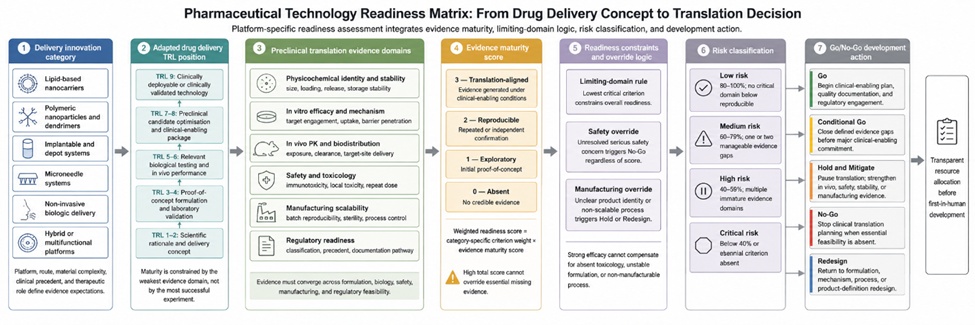
Figure 1. Pharmaceutical Technology Readiness Matrix for Preclinical Classification and Go/No-Go Decision-Making in Drug Delivery Innovation.
The risk classification scheme translates matrix scores into four conceptual categories: low, medium, high, and critical translational risk. Low risk indicates that the delivery system has reproducible evidence across most criteria, a plausible manufacturing pathway, and a clear preliminary regulatory route. Such systems resemble technologies with established platform precedent or well-understood materials, where development uncertainty is concentrated in optimisation rather than fundamental feasibility [34].
Medium risk indicates that the technology has convincing proof-of-concept evidence but unresolved gaps in one or more important domains. A polymeric nanoparticle may show robust in vitro and animal efficacy while still requiring stronger batch reproducibility, degradation-product analysis, or sterility planning [16]. In this category, the appropriate response is not discontinuation but targeted risk reduction through focused experiments and process development.
High risk indicates that several critical evidence domains remain exploratory or inconsistent. This classification often applies to multifunctional nanocarriers, highly engineered targeting systems, or non-invasive biologic delivery approaches where mechanism, biodistribution, safety, and clinical relevance are not yet aligned [19, 35]. High-risk systems may still justify continued investment if the clinical need is strong, but they should not be advanced to clinical-enabling studies without a structured gap-closure plan.
Critical risk indicates that the technology lacks essential evidence for identity, safety, in vivo performance, or manufacturability. At this level, further translation would likely amplify uncertainty and consume resources without a credible development route [1]. The matrix therefore treats critical risk as a redesign or No-Go signal, unless a narrowly defined rescue experiment can address the central failure mechanism.
The decision pathway converts the readiness score and risk category into development action. A technology with high readiness and low risk receives a Go decision for clinical-enabling planning, while a system with moderate readiness and medium risk receives a Conditional Go focused on defined evidence gaps. This pathway reflects the need for transparent resource allocation in drug development, where the cost of advancing immature candidates can be substantial [29].
For high-risk technologies, the pathway recommends a Hold-and-Mitigate decision rather than immediate clinical progression. This status directs teams to address specific deficiencies such as biodistribution uncertainty, toxicity signals, formulation instability, or process irreproducibility before further escalation [25]. For critical-risk technologies, the pathway recommends No-Go or Redesign, especially when the core delivery mechanism is unsupported or the manufacturing route is incompatible with pharmaceutical development [6].
The decision pathway is intended for researchers, funders, investors, translational offices, and regulatory-facing development teams. Researchers can use it to prioritise experiments, funders can use it to compare projects, and regulators can use it as a pre-dialogue evidence map rather than as a substitute for formal assessment [10]. Table 5 maps the decision pathway derived from matrix scores.
Table 5. Decision Pathway Based on Readiness Matrix Scores: Go/No-Go Criteria, Risk Mitigation, and Resource Allocation
Weighted readiness score | Risk class | Decision category | Required action | Resource allocation logic |
80–100% with no critical criterion below reproducible | Low risk | Go | Begin clinical-enabling development plan, quality documentation, and regulatory engagement | Prioritise investment for translation and scale-up |
60–79% with one or two manageable gaps | Medium risk | Conditional Go | Conduct targeted studies to close defined gaps before clinical-enabling commitment | Allocate focused funding to highest-impact weaknesses |
40–59% or multiple immature domains | High risk | Hold and Mitigate | Pause translation, redesign experiments, strengthen in vivo, safety, or manufacturing evidence | Allocate limited milestone-based support |
Below 40% or any essential criterion absent | Critical risk | No-Go or Redesign | Stop clinical translation planning and return to concept, formulation, or mechanism redesign | Avoid major investment until core feasibility is restored |
Any score with unresolved serious safety concern | Critical risk override | No-Go | Investigate mechanism of harm before further development | Protect patients and prevent premature escalation |
Any score with unclear product identity or non-scalable process | Manufacturing override | Hold or Redesign | Establish reproducible product definition and process pathway | Prevent advancement of non-manufacturable concepts |
The pathway also supports iterative reassessment because drug delivery development is rarely linear. A system may move from high to medium risk after resolving biodistribution or stability uncertainty, or it may move from medium to critical risk if repeat-dose toxicity reveals a platform liability [24]. This iterative structure gives the matrix practical value as a living development tool rather than a one-time classification exercise.
The Pharmaceutical Technology Readiness Matrix informs translation strategy by showing which evidence gaps should be closed first. For a lipid nanoparticle with strong formulation reproducibility but limited in vivo biodistribution evidence, the strategy would prioritise pharmacokinetic profiling, tissue distribution, payload release, and immune monitoring before expanding manufacturing investment [13, 14]. For a microneedle platform with promising usability but weak dose uniformity, the strategy would prioritise mechanical testing, insertion reliability, and controlled drug loading [17, 31].
The matrix also helps distinguish platform risk from product-specific risk. A drug delivery technology built from clinically familiar materials may still carry product-specific risks if the route, payload, dose, or release kinetics are novel [3]. Conversely, a novel carrier may become strategically attractive if it addresses a high unmet need and demonstrates strong, reproducible evidence across the most safety-critical and manufacturing-critical domains [15].
For investors and translational funders, the matrix provides a structured way to allocate resources according to readiness rather than enthusiasm alone. Low-risk systems may justify investment in manufacturing scale-up and regulatory preparation, while medium-risk systems may require milestone-based funding tied to toxicology, stability, or process reproducibility [28]. This approach aligns with broader lessons from drug development attrition, where earlier identification of weak candidates can reduce avoidable late-stage losses [1].
For regulatory dialogue, the matrix can serve as a pre-submission organising framework that clarifies what is known, what remains uncertain, and why the proposed next step is justified. Risk-based regulatory thinking in nanomedicine emphasises that complex products require clear documentation of quality attributes, safety assumptions, and development rationale [26]. By linking readiness levels, innovation categories, criteria scores, and decision actions, the matrix may improve communication among academic laboratories, translational units, industrial partners, and regulators [27, 30].
The Pharmaceutical Technology Readiness Matrix offers a conceptual model for classifying drug delivery innovations before clinical translation. It integrates adapted readiness levels, platform categories, preclinical translation criteria, weighted scoring, risk classification, and decision pathways into one structured framework. Its core contribution is to make translational maturity visible across multiple evidence domains rather than reducing readiness to technical novelty or isolated efficacy.
The model may help reduce translational attrition by identifying weaknesses before they become expensive clinical or manufacturing failures. It encourages researchers and decision-makers to ask whether a technology is not only innovative, but also reproducible, safe, scalable, and strategically aligned with clinical need. In doing so, it supports more disciplined progression from discovery to clinical-enabling development.
Future work should empirically validate the matrix across retrospective and prospective drug delivery case studies. Validation should test whether matrix scores correlate with development progression, regulatory interaction quality, funding decisions, and eventual clinical translation. Broader adoption will require refinement across therapeutic areas, delivery routes, regulatory contexts, and stakeholder settings.
None
None
None
None
Open Access The author(s) retain copyright. This article is licensed under the Creative Commons Attribution-NonCommercial-ShareAlike 4.0 International License. It may be shared and adapted for non-commercial purposes with appropriate attribution, an indication of changes, and distribution of adaptations under the same license. Third-party material may be subject to separate terms identified in its credit line. View the license at https://creativecommons.org/licenses/by-nc-sa/4.0/.
 Eurasian Academy of Medicine and Dentistry

