Continuous manufacturing has been promoted as a transformative alternative to batch pharmaceutical production because it can reduce equipment footprint, shorten development-to-commercialisation timelines, and enable more responsive quality assurance. Its appeal rests on the idea that material flows through an integrated process rather than waiting in isolated unit operations. Yet the technical maturity required to make that flow reliable is often understated. The central problem is that continuous operation is sometimes treated as intrinsically superior to batch production, as though continuity alone guarantees better quality. In practice, quality depends on the ability of sensors, models, actuators, supervisory logic, and operators to detect and correct deviations fast enough to prevent poor material from propagating through the line. Without that control capability, continuous systems may amplify rather than resolve process vulnerability. This critical review examines continuous pharmaceutical manufacturing through three linked lenses: control architecture design, process robustness, and regulatory translation. It asks whether current systems are sufficiently controlled to justify claims of superior quality, whether robustness is assessed with appropriate metrics, and whether regulatory frameworks have matured enough to support dynamic manufacturing strategies. The review deliberately treats continuous manufacturing as a socio-technical system rather than as a purely technological upgrade. The evidence indicates that continuous manufacturing has advanced substantially, particularly in direct compression, wet granulation, process analytical technology, residence-time modelling, soft sensing, and model predictive control. However, many demonstrations remain limited by narrow disturbance scenarios, incomplete treatment of start-up and shutdown, uncertain model maintenance requirements, and uneven translation into routine good manufacturing practice. Regulatory acceptance is progressing, but unresolved questions remain around batch definition, traceability, adaptive control validation, and lifecycle change management. The review concludes that continuous manufacturing is not an automatic guarantor of pharmaceutical quality. Its value depends on control-centric process design, standardised robustness assessment, credible digital and analytical infrastructure, and regulatory alignment that recognises dynamic process operation. The future pathway requires stronger pre-competitive collaboration, more realistic stress testing, and regulatory science that keeps pace with advanced control strategies.
Continuous pharmaceutical manufacturing has moved from a largely aspirational concept to a credible production strategy, particularly for oral solid dosage forms and selected active pharmaceutical ingredient pathways. Early industrial and regulatory discussions emphasised smaller equipment footprints, reduced work-in-progress inventory, faster scale-up, and stronger links between process understanding and quality assurance, as shown in drug-product control strategies and regulatory perspectives on implementation [1, 2]. However, the pace of adoption remains uneven, suggesting that technical promise has not automatically translated into broad industrial confidence. This gap is the starting point for a critical review rather than a celebratory account.
The dominant narrative often implies that continuous manufacturing improves quality because material is processed under steady conditions and monitored in real time. Yet reviews of process development and integrated continuous technologies show that the shift from batch to continuous operation also increases dependence on automation, residence-time understanding, sensor reliability, and coordinated control across unit operations [3, 4]. This means that quality is not simply built into continuity; it is actively maintained through control decisions made over time. The assumption that continuity itself reduces risk therefore requires careful interrogation.
The industrial challenge is compounded by the fact that continuous manufacturing changes the meaning of familiar pharmaceutical concepts such as batch, scale, validation, sampling, deviation management, and traceability. Regulatory analyses and recent application experience indicate that agencies have become more receptive, but questions remain about how to define acceptance criteria for dynamic processes and how to evaluate real-time release strategies across product lifecycles [2, 5]. These questions are not peripheral administrative issues, because they shape how firms design control strategies and justify commercial operation. Regulatory translation therefore sits at the centre of technical implementation rather than after it.
This review critically examines whether the control architectures, robustness demonstrations, and regulatory pathways described in the literature are adequate for the claims made about continuous manufacturing. Recent work on model risk frameworks reminds us that models embedded in manufacturing decisions introduce their own lifecycle responsibilities, including verification, maintenance, and governance [6]. The review also considers active pharmaceutical ingredient and drug-product manufacturing together because both reveal the same underlying dependency: continuous production succeeds only when material flow, process dynamics, and quality decisions are jointly controlled [7]. The purpose is to challenge simplistic superiority claims and identify the conditions under which continuous manufacturing can become reliably superior in practice.
The logic of continuous manufacturing differs from batch production because material quality is governed by flow history rather than by the retrospective testing of a discrete vessel or lot. In continuous direct compression, for example, feeders, blenders, lubrication, compression, and rejection systems must operate as linked dynamic units rather than as independent batch steps [1]. This shift changes the central quality question from “did the batch pass?” to “which material experienced which process state at which time?”. The answer depends on residence-time distributions, process monitoring, and data systems capable of connecting process history with product disposition.
Continuous manufacturing is frequently associated with real-time quality assurance, but the underlying mechanism is not simply faster testing. Process analytical technology demonstrations show that measurements must be embedded into a control and decision framework before they can support real-time process management [8]. Residence-time distribution models further illustrate that a quality event at one point in the process can affect downstream material over a time-distributed window rather than at a single instant [9]. Continuous logic therefore requires temporal reasoning that is less prominent in conventional batch release systems.
The transition from batch to continuous operation also alters how variability enters and moves through the manufacturing system. Raw material variability, including differences in active pharmaceutical ingredient properties, can influence feeding, blending, compaction, and downstream quality attributes in ways that are magnified by sustained operation [10]. Reviews of oral solid dosage manufacturing emphasise that equipment integration can improve efficiency, but only if the system can absorb normal variability without frequent shutdown or excessive diversion [11, 12]. Continuous manufacturing is therefore less a static production format than a dynamic quality-management problem.
Table 1 contrasts the key attributes of batch and continuous manufacturing paradigms. The comparison is important because many claims made for continuous manufacturing are valid only when the control requirements in the right-hand columns are satisfied. As recent work on application of continuous manufacturing for solid oral dosage forms shows, the technological platform is maturing, but its performance remains linked to material handling, process design, and quality-monitoring capability [13]. The table therefore frames continuous manufacturing as a different process logic, not merely a faster version of batch production.
Table 1. Batch versus Continuous Manufacturing: Comparison of Process Logic, Control Requirements, and Quality Assurance
Attribute | Batch manufacturing paradigm | Continuous manufacturing paradigm | Critical implication for quality assurance |
Material flow | Material is processed in discrete lots with defined start and end points. | Material flows through integrated unit operations over time. | Quality decisions must account for temporal propagation of disturbances and material history. |
Process state | Operation is often evaluated after completion of a batch step. | Operation must be evaluated during production under dynamic conditions. | Monitoring and control must act fast enough to prevent nonconforming material from advancing. |
Scale concept | Scale is usually increased by larger equipment or larger batch size. | Scale is often increased by longer run time or parallelisation. | Validation must justify sustained performance rather than only geometric scale-up. |
Quality assurance philosophy | Quality is commonly confirmed through end-product and intermediate testing. | Quality is increasingly assured through process understanding, PAT, and control. | Release decisions depend on the credibility of sensors, models, and data integrity. |
Disturbance handling | Deviations may be isolated to a batch or sub-batch. | Disturbances propagate according to residence-time behaviour. | Material diversion and traceability require robust residence-time models. |
Start-up and shutdown | Start and end phases are typically inherent to each batch. | Start-up and shutdown may generate transient material outside steady state. | Control strategies must define when production is acceptable and how transitional material is handled. |
Regulatory framing | Batch identity is usually intuitive and physically bounded. | Batch identity may be time-based, quantity-based, or process-defined. | Regulatory justification must align batch definition with traceability and control strategy. |
Control architecture design is the technical core of continuous pharmaceutical manufacturing because integrated operation demands coordinated decisions across multiple timescales. Foundational demonstrations of model predictive control in integrated pilot plants showed that multivariable control could manage interactions that simpler single-loop strategies may not address effectively [14]. However, these studies also highlight a critical limitation: the control strategy is only as reliable as the model, measurements, constraints, and disturbance assumptions embedded in it. Continuous manufacturing therefore shifts risk from isolated unit-operation failure toward architecture-level failure.
Conventional proportional-integral-derivative and cascade control remain important because they are transparent, familiar, and easier to validate than more advanced algorithms. Yet tablet compaction and feeding-blending systems can exhibit coupled dynamics, actuator constraints, and delayed quality responses that challenge purely local control logic, which motivates advanced model predictive control and state estimation approaches [15, 16]. The practical question is not whether advanced control is theoretically superior, but when its added complexity is justified by measurable improvements in quality protection. A critical review must therefore evaluate control architectures by their lifecycle maintainability as well as their short-term performance.
Soft sensors and hierarchical control structures are attractive because many critical quality attributes cannot be measured directly at the required frequency or location. Work on soft sensors across continuous pharmaceutical processes shows that inferential measurements can extend process visibility, but these methods depend on calibration stability, representative training data, and ongoing model maintenance [17]. The Quality-by-Control perspective similarly argues that pharmaceutical quality can be actively regulated through feedback and optimisation, but it also implies a stronger dependency on automation governance than traditional Quality-by-Design narratives sometimes acknowledge [18]. In this sense, advanced control may reduce some risks while creating new model-management risks.
Table 2 categorises the control architectures used in continuous pharmaceutical processes. This classification clarifies that each architecture carries a different balance of simplicity, responsiveness, regulatory explainability, and vulnerability to model mismatch. User-oriented reviews of model predictive control and recent automation of continuous wet granulation lines demonstrate that implementation feasibility depends as much on integration with plant realities as on control theory [19, 20]. The table therefore treats control design as a set of strategic choices rather than a linear progression from simple to advanced.
Table 2. Control Architecture Designs for Continuous Pharmaceutical Manufacturing: Types, Features, and Critical Limitations
Control architecture | Typical role in continuous pharmaceutical manufacturing | Main strengths | Critical limitations |
Local PID control | Maintains feeder rates, temperatures, pressures, screw speeds, or compression forces. | Familiar, transparent, relatively easy to validate, and suitable for fast local regulation. | Limited ability to manage multivariable interactions, delayed quality responses, and plant-wide optimisation. |
Cascade control | Coordinates primary and secondary loops, such as quality-related setpoints mediated through equipment variables. | Improves disturbance rejection when intermediate variables respond faster than quality attributes. | Performance depends on correct loop pairing and may degrade when process dynamics change. |
Feedforward control | Uses measured upstream disturbances, such as raw material variation or feeder deviations, to adjust downstream operation. | Can act before quality attributes drift out of range. | Requires reliable disturbance measurements and accurate understanding of propagation delays. |
Model predictive control | Optimises future control moves using process models, constraints, and predicted quality outcomes. | Handles multivariable interactions, constraints, and delayed responses more systematically than local control. | Sensitive to model mismatch, computational burden, validation expectations, and lifecycle model maintenance. |
Adaptive control | Updates control parameters or models as process conditions change. | Potentially useful for raw material variability and equipment ageing. | Regulatory acceptance is challenging when adaptation rules, model drift, and validation boundaries are unclear. |
Soft-sensor-based control | Uses inferred quality attributes from spectral, process, or multivariate data. | Extends control to attributes that are difficult to measure directly in real time. | Vulnerable to calibration transfer problems, sensor fouling, and extrapolation beyond training data. |
Hierarchical supervisory control | Coordinates scheduling, setpoints, material diversion, and plant-wide objectives above local loops. | Supports integrated decision-making across unit operations and quality systems. | Requires robust data infrastructure, clear authority boundaries, and strong failure-management logic. |
Hybrid mechanistic–data-driven control | Combines first-principles understanding with empirical or machine-learning models. | Can improve prediction where purely mechanistic models are incomplete. | Raises questions about interpretability, model risk, data representativeness, and regulatory documentation. |
Figure 1 presents a control-centric architecture showing how continuous pharmaceutical manufacturing quality depends on coordinated material flow, sensor feedback, model-based control, supervisory logic, human oversight, and diversion decisions rather than on continuous operation alone.
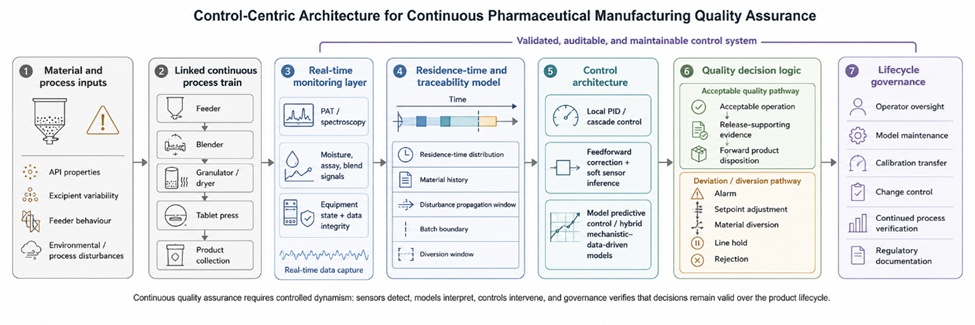
Figure 1. Control-Centric Architecture for Continuous Pharmaceutical Manufacturing Quality Assurance
Process robustness in continuous manufacturing should mean more than the ability to run at nominal steady state under well-controlled laboratory conditions. Raw material studies show that active pharmaceutical ingredient variability can influence secondary continuous manufacturing performance, which means robustness must include sensitivity to realistic input variation rather than only equipment repeatability [10]. This is especially important because continuous systems may operate for long durations during which small deviations accumulate or interact with downstream unit operations. A robust process is therefore one that maintains quality under plausible disturbances, not merely one that performs well during ideal demonstrations.
Disturbance rejection is a recurring weakness in the continuous-manufacturing literature because many studies test control systems against simplified or narrow perturbations. Fault-tolerant process control and risk analysis work has shown that resilience depends on the ability to detect, isolate, and mitigate faults before affected material reaches unacceptable quality states [21]. Flowsheet modelling approaches add value by evaluating quality risks across integrated systems, but they can also create false confidence if model assumptions are not stress-tested against real operating variability [22]. The critical question is whether robustness claims survive scenarios involving simultaneous disturbances, sensor degradation, equipment wear, and material variability.
Start-up, shutdown, and transition management are especially important because continuous manufacturing is often justified through steady-state efficiency. Residence-time distribution strategies show how transitional material can be identified and diverted, but they also expose the difficulty of defining precise material boundaries in dynamically mixed systems [9]. Studies of operational simplification and continuous improvement suggest that mature process control can reduce complexity, yet simplification is credible only when the underlying system dynamics have been characterised sufficiently [23, 24]. Robustness assessment must therefore include non-steady-state operation rather than treating it as an exception outside the main validation logic.
Current robustness metrics remain underdeveloped because they often focus on whether a system remains within specification, rather than how close it comes to failure or how quickly it recovers. Deep-learning and process monitoring studies demonstrate the promise of richer data analytics, but they also raise concerns about interpretability, transferability, and overfitting when models are moved into routine production [25]. Reviews of process analytical technology and real-time release testing show that monitoring tools can detect deviations, yet detection alone is not equivalent to controlled robustness unless linked to validated intervention logic [26, 27]. A stronger robustness framework would measure disturbance tolerance, recovery time, diversion accuracy, model validity, and regulatory defensibility as connected attributes.
Quality monitoring is often presented as the enabling layer that makes continuous manufacturing superior to batch release, but this claim is only defensible when monitoring is connected to timely and validated process decisions. Process analytical technology has demonstrated strong potential in commercial and near-commercial continuous manufacturing because spectroscopic and process measurements can track blend uniformity, assay, moisture, or other quality-relevant variables during production [8]. However, monitoring data do not automatically create quality assurance; they must be translated into control actions, diversion decisions, or release logic. The distinction between measurement availability and decision reliability remains one of the most important unresolved gaps.
Real-time release testing is central to the continuous manufacturing vision because it promises to replace delayed end-product testing with evidence generated during production. Reviews of real-time release testing show that pharmaceutical tablets can be evaluated through integrated models, PAT tools, and process understanding, but they also emphasise that the approach requires validated measurement systems and robust lifecycle governance [26]. This is particularly demanding when critical quality attributes are inferred rather than directly measured. The challenge is not only analytical performance, but also the regulatory credibility of the full monitoring-to-release chain.
Soft sensors extend quality monitoring by estimating variables that are difficult, slow, or impossible to measure continuously. Studies across continuous pharmaceutical processes show that soft sensors can support control by combining process data and analytical signals, while machine-learning approaches suggest further potential for high-dimensional quality prediction [17, 25]. Yet the same approaches may become fragile when raw materials, equipment states, or operating regimes differ from the data used to build them. A critical monitoring strategy must therefore include calibration maintenance, drift detection, and clear rules for when a model is no longer valid.
Multivariate statistical process control and data reconciliation add another layer by helping distinguish meaningful process shifts from ordinary noise. Data reconciliation studies in Quality-by-Design implementation show that integrated data structures can improve consistency across continuous tablet manufacturing, but they also reveal the dependency on correct sensor weighting, process models, and error assumptions [28]. In routine good manufacturing practice, the weakest link may be neither the sensor nor the model alone, but the governance system that decides how conflicting evidence is resolved. Quality monitoring in continuous manufacturing is therefore a socio-technical control system, not merely an analytical upgrade.
Regulatory translation has advanced substantially, but it remains uneven because continuous manufacturing challenges long-standing assumptions about batches, validation, and release testing. Regulatory perspectives published during the early commercialisation period described a shift from theoretical acceptance toward practical engagement, including more explicit discussion of control strategies, process understanding, and lifecycle management [2]. This progress is significant because regulatory uncertainty has historically discouraged firms from adopting unfamiliar manufacturing technologies. Nevertheless, acceptance of continuous manufacturing does not remove the need to justify how dynamic operation remains under control.
One persistent ambiguity concerns batch definition, because continuous production may define a batch by time, mass, equipment state, campaign segment, or traceability interval. Residence-time distribution modelling can support material tracking and diversion, but it also shows that material identity in continuous systems is probabilistic and time-distributed rather than physically discrete [9]. Recent regulatory experience with continuous manufacturing and real-time release testing for dissolution confirms that agencies are evaluating such strategies in actual submissions, but also that justification depends on product-specific evidence and clear control logic [5]. This makes regulatory translation highly dependent on the maturity of the firm’s process model and monitoring strategy.
Adaptive and model-based control create an additional regulatory challenge because they blur the boundary between a fixed validated process and a process that changes its behaviour in response to data. Model predictive control studies show strong potential for managing multivariable dynamics, while combined moving-horizon estimation and nonlinear model predictive control approaches demonstrate how plant-model mismatch can be addressed more actively [14, 29]. Yet the more dynamic the control strategy becomes, the more important it is to define validation boundaries, model update rules, failure modes, and human oversight. Regulatory science must therefore evolve from accepting continuous equipment to evaluating continuous decision-making.
Table 3 maps the regulatory translation pathway and current acceptance barriers. The pathway shows that continuous manufacturing has moved beyond conceptual endorsement, but still requires stronger alignment around traceability, batch definition, adaptive control, model risk, and post-approval change management. Work on model risk frameworks for pharmaceutical manufacturing reinforces that process models used in control, monitoring, and release decisions need explicit governance across their lifecycle [6]. Regulatory translation is therefore best understood as a gradual expansion of trust in controlled dynamism, rather than as simple approval of a new production format.
Table 3. Regulatory Translation of Continuous Manufacturing: Guidance Milestones, Acceptance Criteria, and Remaining Gaps
Regulatory translation element | Current direction of acceptance | Evidence or acceptance criterion commonly expected | Remaining gap |
Batch definition | Increasing acceptance of time-based, mass-based, or process-defined batches. | Clear linkage between batch boundary, material traceability, and quality decision rules. | Lack of universal convention for defining batches across different continuous platforms. |
Residence-time modelling | Widely recognised as important for traceability and diversion. | Experimentally supported residence-time distribution models and justified diversion windows. | Uncertainty in complex integrated lines, changing operating states, and non-steady-state transitions. |
PAT-enabled monitoring | Accepted when methods are validated and linked to critical quality attributes. | Demonstrated accuracy, robustness, calibration maintenance, and data integrity. | Difficulty maintaining model validity across raw material, equipment, and lifecycle changes. |
Real-time release testing | Increasingly accepted in selected applications. | Strong correlation between process measurements, quality attributes, and release criteria. | Uneven industrial confidence and product-specific burden of proof. |
Model predictive control | Technically promising and increasingly discussed. | Validated models, defined constraints, alarm logic, and fallback strategies. | Limited regulatory precedent for complex multivariable and adaptive strategies. |
Adaptive control | Conceptually attractive for variable inputs and long campaigns. | Predefined adaptation rules, validation boundaries, and monitoring of model drift. | Ambiguity over acceptable self-adjustment during validated commercial operation. |
Process validation | Moving toward lifecycle and continued-process-verification logic. | Evidence of sustained control across operating ranges and disturbances. | Need for standardised robustness protocols specific to continuous systems. |
Post-approval changes | Potentially more flexible when supported by process understanding. | Comparability evidence, model impact assessment, and control-strategy justification. | Risk that firms avoid innovation because change-management expectations remain uncertain. |
Industrial adoption barriers are not limited to scientific uncertainty; they include investment timing, organisational capability, and risk perception. Continuous manufacturing may reduce footprint and inventory, but it often requires high upfront capital investment in integrated equipment, PAT, automation, data infrastructure, and specialised engineering support [3, 12]. Firms must also decide whether to retrofit existing batch facilities or design new continuous lines, a choice that affects validation, supply chain planning, and workforce deployment. These barriers are especially difficult when existing batch processes are already approved, profitable, and familiar.
Workforce capability is a major barrier because continuous manufacturing requires a different combination of pharmaceutical science, chemical engineering, automation, statistics, and regulatory expertise. Reviews of integrated continuous technologies show that successful implementation depends on understanding unit operations as a connected system rather than as separable manufacturing steps [4]. This systems perspective is not always embedded in traditional pharmaceutical organisations, where development, manufacturing, quality, and regulatory functions may operate with different incentives. Adoption therefore requires organisational redesign as much as equipment purchase.
Supply chain integration also constrains adoption because continuous manufacturing changes how firms think about campaign length, raw material qualification, inventory, and demand responsiveness. Active pharmaceutical ingredient continuous manufacturing perspectives highlight opportunities for more agile and intensified production, but also show that upstream chemistry, isolation, purification, and downstream formulation must be coordinated to realise end-to-end value [7]. When only one segment of the supply chain becomes continuous, bottlenecks and handoff risks may remain elsewhere. The industrial case for continuous manufacturing is therefore strongest when process integration is matched by supply chain integration.
Case examples in the literature suggest that successful implementation depends on a realistic control strategy rather than on the mere installation of continuous equipment. Drug-product control strategies for continuous direct compression illustrate how start-up, shutdown, diversion, and product collection must be specified before clinical or commercial manufacturing can be credible [1]. Operational studies also suggest that simplification and continuous improvement can emerge after implementation, but only once the line’s dynamics are sufficiently understood and controlled [23]. Stalled adoption is therefore often less a rejection of continuous manufacturing than a rational response to unresolved technical and regulatory uncertainty.
The future pathway for continuous pharmaceutical manufacturing should begin with standardised robustness protocols. Current studies show valuable progress in risk assessment, state estimation, and fault-tolerant control, but the field lacks common stress-test expectations for disturbances, sensor degradation, raw material variability, start-up, shutdown, and recovery [16, 21, 22]. Without such standards, robustness claims remain difficult to compare across platforms and products. A more mature field would define not only whether quality specifications are met, but how much disturbance the system can absorb before quality assurance fails.
Pre-competitive collaboration is also needed around control architecture design because firms face similar technical uncertainties but may lack incentives to publish failures or near-failures. Model predictive control, soft sensors, and hybrid automation strategies have been demonstrated in increasingly realistic settings, yet their validation, maintenance, and fallback requirements remain unevenly documented [19, 20, 24]. Shared frameworks for model lifecycle management, control-system qualification, and diversion strategy verification would reduce duplication while preserving product-specific innovation. Such collaboration would also help regulators evaluate advanced control strategies consistently.
Regulatory frameworks must evolve to explicitly accommodate dynamic control strategies rather than treating them as exceptional deviations from fixed process validation. Evidence from regulatory experience, real-time release discussions, and model risk frameworks suggests that agencies are moving in this direction, but industry still needs clearer expectations for adaptive algorithms, model updates, and post-approval control changes [5, 6, 26]. The most credible future is not unregulated autonomy, but bounded, transparent, and auditable control dynamism. Continuous manufacturing will become truly transformative only when technical control, robustness evidence, and regulatory confidence mature together.
Figure 2 maps the staged pathway through which continuous pharmaceutical manufacturing can progress from technical demonstration to regulatory confidence by combining realistic robustness testing, monitoring validity, model-risk governance, traceability, and lifecycle change management.
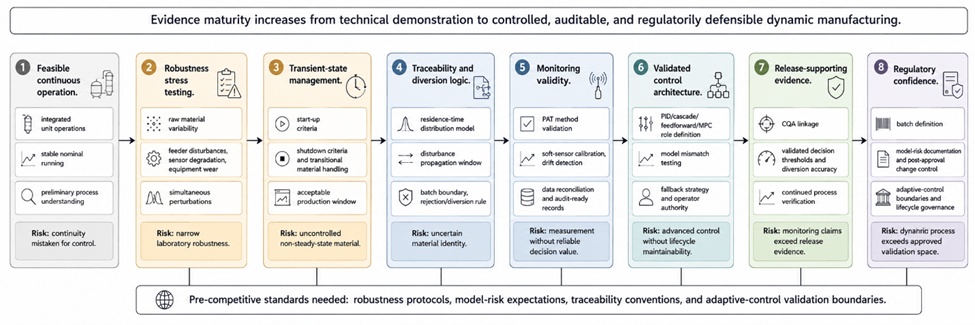
Figure 2. Robustness-to-Regulatory Translation Pathway for Continuous Pharmaceutical Manufacturing
Continuous pharmaceutical manufacturing offers genuine advantages, including process intensification, reduced inventory, greater monitoring density, and the possibility of real-time quality assurance. However, this review shows that those advantages are conditional rather than inherent. Continuous operation can improve quality only when material flow, process dynamics, monitoring systems, control architectures, and regulatory decisions are coherently integrated.
The critical issue is that continuous manufacturing replaces some familiar batch risks with new dynamic risks. Disturbances may propagate through residence-time distributions, models may drift, sensors may foul, and start-up or shutdown material may challenge simple definitions of conformity. These risks are manageable, but only through control-centric design, standardised robustness assessment, and lifecycle governance that treats models and automation as regulated components of the manufacturing system.
The future of continuous manufacturing should therefore be framed less as a technological conversion from batch to flow and more as the maturation of a controlled manufacturing ecosystem. Industry, academia, and regulators must collaborate on robustness protocols, model-risk expectations, adaptive-control boundaries, and practical real-time release strategies. Only then can continuous pharmaceutical manufacturing fulfil its promise as a reliable, efficient, and scientifically justified route to pharmaceutical quality.
None
None
None
None
Open Access The author(s) retain copyright. This article is licensed under the Creative Commons Attribution-NonCommercial-ShareAlike 4.0 International License. It may be shared and adapted for non-commercial purposes with appropriate attribution, an indication of changes, and distribution of adaptations under the same license. Third-party material may be subject to separate terms identified in its credit line. View the license at https://creativecommons.org/licenses/by-nc-sa/4.0/.
 Eurasian Academy of Medicine and Dentistry

